
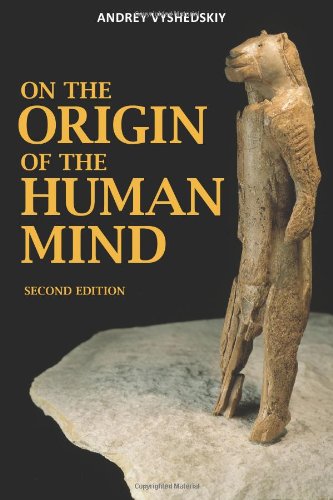
On the Origin of the Human Mind
by Andrey Vyshedskiy
Publisher: MobileReference 2014
ISBN/ASIN: 1492963615
Number of pages: 442
Description:
The origin of the human mind remains one of the greatest mysteries of all times. Using his background in neuroscience, the author offers an elegant, parsimonious theory of the evolution of the human mind and suggests experiments that could be done to test, refute, or validate the hypothesis.
Download or read it online for free here:
Download link
(12MB, PDF)
Similar books
 Neural Plasticity and Memory: From Genes to Brain Imaging
by Federico Bermudez-Rattoni - CRC Press
A comprehensive, multidisciplinary review, this book provides an in-depth, up-to-date analysis of the study of the neurobiology of memory. Leading specialists share their scientific experience in the field, covering a wide range of topics.
(11483 views)
 Translational Pain Research: From Mouse to Man
by Lawrence Kruger, Alan R. Light - CRC Press
Bringing together recent advances in modern neuroscience regarding genetic studies in mice and humans and the practicality of clinical trials, this volume effectively bridges the gap between basic research and patient care.
(9574 views)
 Neuroproteomics
by Oscar Alzate - CRC Press
In this, the Post-Genomic Age, our knowledge of biological systems continues to expand and progress. Genomic research progresses to proteomics and brings us to a deeper understanding of the behavior and function of protein clusters.
(10587 views)
 Decision Making under Uncertainty
by Kerstin Preuschoff, Peter NC Mohr, Ming Hsu - Frontiers Media SA
Little is known about how uncertainty is processed and how they are integrated with expected rewards throughout the decision making process. This book provides a deeper understanding of the processes behind decision making under uncertainty.
(6761 views)