
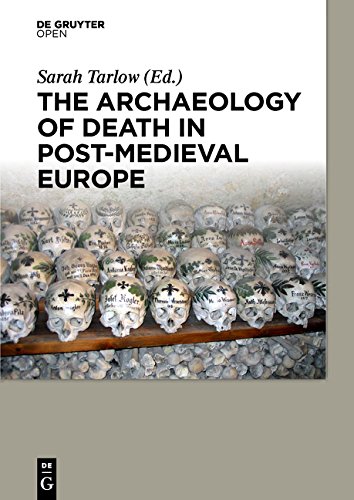
The Archaeology of Death in Post-medieval Europe
by Sarah Tarlow (ed.)
Publisher: Walter de Gruyter & Co. 2015
ISBN/ASIN: 3110439727
Number of pages: 237
Description:
There is now a real appetite on the part of those researching the burial practices of the last 500 years or so for an opportunity to present and discuss our work. This volume represents, we hope, an early contribution to an international discussion of what is still a new and fragmented area of archaeological research.
Download or read it online for free here:
Download link
(multiple PDF files)
Similar books
 Dead Men Tell Tales
by Harry Rimmer
The general public is conscious of the field of archaeology, and the great discoveries that are being made in that realm. In this volume you will go with the diggers into the ancient ages of the Bible lands, and learn many things ...
(3059 views)
 A Thousand Miles up the Nile
by Amelia B. Edwards - A. L. Burt Company
Sailing the Nile and armed with sketch-book and measuring tape, Amelia Edwards carefully recorded all she saw of the temples and monuments, and provided in A Thousand Miles Up The Nile the first general archaeological survey of Egypt's ruins.
(9580 views)
 Open Source Archaeology
by Andrew T. Wilson, Ben Edwards - De Gruyter Open
This volume discusses important issues around open access to data and software in academic and commercial archaeology, and summarises both the current state of theoretical engagement, and technological development in the field of open-archaeology.
(8988 views)
 Archaeology: New Approaches in Theory and Techniques
by Imma Ollich-Castanyer - InTech
Topics: New Approaches About Archaeological Theory; Use of Geophysics on Archaeological Fieldwork; New Applied Techniques - Improving Material Culture and Experimentation; and Sharing Knowledge - Some Proposals Concerning Education.
(10700 views)