
Introduction to Human Osteology
by Roberta Hall, et al.
Publisher: ScholarWorks@GVSU 2010
Number of pages: 131
Description:
This text was designed for use in the human osteology laboratory classroom. Bones are described to aid in identification of skeletonized remains in either an archaeological or forensic anthropology setting. Basic techniques for siding, aging, sexing, and stature estimation are described. Both images of bone and drawings are included which may be used for study purposes outside of the classroom.
Download or read it online for free here:
Download link
(17MB, PDF)
Similar books
 Basic Anatomy and Physiology of Human Body
by A. O. Osunderu - National Open University of Nigeria
Anatomy and physiology are closely integrated both theoretically and practically. Anatomical information provides clues about probable functions and physiological mechanisms can be explained only in terms of the underlying anatomy.
(17588 views)
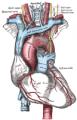 Anatomy of the Human Body (20th Edition)
by Henry Gray, Warren H. Lewis - Lea & Febiger
The Bartleby.com edition of Gray’s Anatomy of the Human Body features 1,247 vibrant engravings—many in color—from the classic 1918 publication, as well as a subject index with 13,000 entries ranging from the Antrum of Highmore to the Zonule of Zinn.
(28279 views)
 Anatomy: Descriptive and Applied
by Henry Gray, Edward Spitzka - Lea & Febiger
As a thoroughly practical treatise on the subject for the medical student, Gray's Anatomy has long been held in the highest esteem. The essentials are here embodied into a complete account of the structures of the human body and their development.
(20043 views)
 Surgical Applied Anatomy
by Frederick Treves - Lea Brothers and Co.
Applied anatomy serves to give a precise basis to those incidents and procedures in practice that more especially involve anatomical knowledge. It endues the dull items of that knowledge with meaning by the aid of illustrations drawn from experience.
(18146 views)