
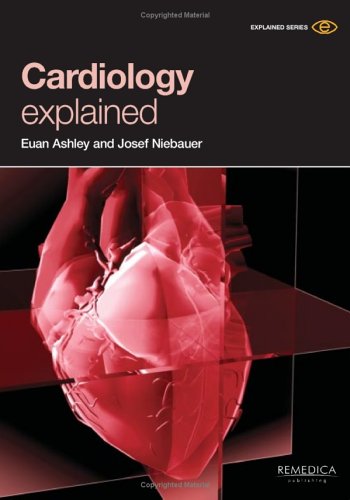
Cardiology Explained
by Euan Ashley, Josef Niebauer
Publisher: Remedica Publishing 2003
ISBN/ASIN: 1901346226
ISBN-13: 9781901346220
Number of pages: 243
Description:
This text explains basic physiologic and pathophysiologic mechanisms of cardiovascular disease in a straightforward and diagrammatic manner, giving guidelines as to when referral to specialist colleagues is appropriate while further offering explanation of what the specialist is likely to do. Specific sections focus on understanding cardiology specialist tests, conquering the ECG, cardiology acronyms, and explaining the basic science so often discussed without introduction in seminars and lectures. This work is designed to have wide appeal, aimed at the hosptal doctor, generalist or even senior medical student who may need a cardiology opinion.
Download or read it online for free here:
Read online
(online html)
Similar books
 Strategies to Improve Cardiac Arrest Survival
- National Academies Press
This book examines the complete system of response to cardiac arrest in the United States and identifies opportunities within existing and new treatments, strategies, and research that promise to improve the survival and recovery of patients.
(5424 views)
 Inflammatory Atherosclerosis: Characteristics of the Injurious Agent
by Richard J. Frink - Heart Research Foundation Sacrament
The book on the nature and characteristics of the injurious agent through study of the microscopic changes taking place in the coronary arteries of patients with and without clinical coronary disease. Includes high-quality color photographs.
(15665 views)
 The Gross Physiology of the Cardiovascular System
by Robert M. Anderson - Racquet Press
Written by Robert Anderson, a pioneer cardiac surgeon and inventor of cardiovascular bypass equipment. The website includes a 20 minute video, that presents a clear and intuitive overview of the concepts included in the text.
(13072 views)
 Mechanisms of Vascular Disease: A Reference Book for Vascular Specialists
by Robert Fitridge, Matthew Thompson - University of Adelaide Press
New updated edition first published with Cambridge University Press. This edition includes 29 chapters on topics as diverse as pathophysiology of atherosclerosis, vascular haemodynamics, haemostasis, thrombophilia and post-amputation pain syndromes.
(7383 views)