
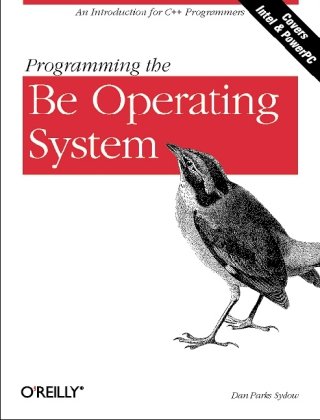
Programming the Be Operating System
by Dan Parks Sydow
Publisher: O'Reilly 1999
ISBN/ASIN: 1565924673
ISBN-13: 9781565924673
Number of pages: 400
Description:
The Be operating system is a great platform just waiting for applications. This book gives C++ programmers their start to developing those applications. The book begins with typical "Hello, world" programs and gradually adds elements of the graphical interface. It carefully describes drawing and message handling. While the focus is on the graphical interface, basic OS features like threads and file handling are also introduced.
Download or read it online for free here:
Download link
(multiple PDF files)
Similar books
 Practical Guide to Bare Metal C++
by Alex Robenko - GitBook
The intended audience of this document is professional C++ developers who want to understand bare metal development a little bit better, get to know how to use C++ language in an embedded environment, and bring their C++ skills to an 'expert' level.
(8112 views)
 Taligent's Guide to Designing Programs
- Taligent Press
Well-Mannered object-oriented design in C++: this is a brief overview of object-oriented program design, focusing on operating-system development. The text will be of interest to the C++ programmers who need a quick summary of good OOP techniques.
(21063 views)
 C++ for C Programmers
by JT Kalnay - Smashwords
A book with exhaustive examples of C++ intended to help a C programmer learn and use C++. The book is not organized in a traditional chapter format, included are example programs that illustrate the important points of C++ in an evolutionary manner.
(17676 views)
 Optimizing C ++
by Steve Heller - Prentice Hall PTR
The book provides C++ programmers with a practical approach to code optimization. The text consists of case studies of database problems with various searching and compression algorithms, the source code, and explanation of the solutions.
(19483 views)