
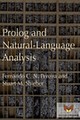
Prolog and Natural-Language Analysis
by F. C. N. Pereira, S. M. Shieber
Publisher: Center for the Study of Language 2002
ISBN/ASIN: 0937073172
ISBN-13: 9780937073179
Number of pages: 204
Description:
This book provides, in one volume, one of the best introductions to prolog programming and one of the best introductions to natural language processing. It is virtually unique in that it shows how to interface a natural language interface to a theorem prover. This book was far ahead of its time when it was published, and it is still far ahead of most of the books written today on NLP.
Download or read it online for free here:
Download link
(1.2MB, PDF)
Similar books
 prolog :- tutorial
by J. R. Fisher - California State Polytechnic University, Pomona
Prolog is a logical and a declarative programming language. This tutorial is intended to help learn the essential, basic concepts of Prolog. The sample programs have been chosen to promote the use of Prolog in an artificial intelligence course.
(7892 views)
 Learn Prolog Now!
by Patrick Blackburn, Johan Bos, Kristina Striegnitz - College Publications
One of the most popular introductions to Prolog, an introduction prized for its clarity and down-to-earth approach. It is widely used as a textbook at university departments around the world, and even more widely used for self study.
(18170 views)
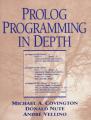 Prolog Programming in Depth
by Michael A. Covington, Donald Nute, Andre Vellino - Prentice-Hall
Full coverage of the Prolog programming language including the latest ISO standard. Includes ready-to-run code for expert system shells, other intelligent problem-solvers, and algorithms to read foreign file formats, even Lotus spreadsheets.
(8451 views)
 An Introduction to Logic Programming through Prolog
by Michael Spivey - Prentice Hall
Using theory as a foundation for practical programming, this text presents the theory of logic programming with clear proofs and implementation techniques. It covers logical theory, programming, and the structure of a simple Prolog implementation.
(15118 views)