
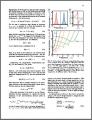
Introduction to Quantum Noise, Measurement and Amplification
by A. A. Clerk, at al.
Publisher: arXiv 2008
Number of pages: 102
Description:
The topic of quantum noise has become extremely timely due to the rise of quantum information physics and the resulting interchange of ideas between the condensed matter and AMO/quantum optics communities. This review gives a pedagogical introduction to the physics of quantum noise and its connections to quantum measurement and quantum amplification.
Download or read it online for free here:
Download link
(2.1MB, PDF)
Similar books
 Consistent Quantum Theory
by Robert B. Griffiths - Cambridge University Press
This volume elucidates the consistent quantum theory approach to quantum mechanics at a level accessible to university students in physics, chemistry, mathematics, and computer science, making this an ideal supplement to standard textbooks.
(13570 views)
 Overview of Bohmian Mechanics
by Xavier Oriols, Jordi Mompart - arXiv
This chapter provides a comprehensive overview of the Bohmian formulation of quantum mechanics. After a historical review, a formal explanation of Bohmian mechanics for nonrelativistic, single-particle quantum systems is presented.
(9601 views)
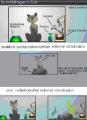 The basic paradoxes of statistical classical physics and quantum mechanics
by Oleg Kupervasser - arXiv
Statistical classical mechanics and quantum mechanics are two developed theories that contain a number of paradoxes. However the given paradoxes can be resolved within the framework of the existing physics, without introduction of new laws.
(14148 views)
 Perspectives in Quantum Physics: Epistemological, Ontological and Pedagogical
by Charles Baily - arXiv
The author shows how a transformed modern physics curriculum may positively impact student perspectives on indeterminacy and wave-particle duality, by making questions of classical and quantum reality a central theme of his course.
(11128 views)