
An Introduction to Gaussian Geometry
by Sigmundur Gudmundsson
Publisher: Lund University 2009
Number of pages: 75
Description:
The purpose of these notes is to introduce the beautiful theory of Gaussian geometry i.e. the theory of curves and surfaces in three dimensional Euclidean space. The text is written for students with a good understanding of linear algebra, real analysis of several variables, and basic knowledge of the classical theory of ordinary differential equations and some topology.
Download or read it online for free here:
Download link
(370KB, PDF)
Similar books
 Synthetic Geometry of Manifolds
by Anders Kock - University of Aarhus
This textbook can be used as a non-technical and geometric gateway to many aspects of differential geometry. The audience of the book is anybody with a reasonable mathematical maturity, who wants to learn some differential geometry.
(11004 views)
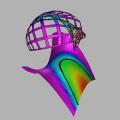 Cusps of Gauss Mappings
by Thomas Banchoff, Terence Gaffney, Clint McCrory - Pitman Advanced Pub. Program
Gauss mappings of plane curves, Gauss mappings of surfaces, characterizations of Gaussian cusps, singularities of families of mappings, projections to lines, focal and parallel surfaces, projections to planes, singularities and extrinsic geometry.
(15697 views)
 Functional Differential Geometry
by Gerald Jay Sussman, Jack Wisdom - MIT
Differential geometry is deceptively simple. It is surprisingly easy to get the right answer with informal symbol manipulation. We use computer programs to communicate a precise understanding of the computations in differential geometry.
(11507 views)
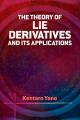 The Theory of Lie Derivatives and Its Applications
by Kentaro Yano - North Holland Publishing Co.
The topics include: Spaces with a non-vanishing curvature tensor that admit a group of automorphisms of the maximum order; Groups of transformations in generalized spaces; Global properties of the groups of motions in a compact Riemannian space...
(3274 views)