
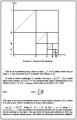
Measure-Preserving Systems
by Karl Petersen
Publisher: University of North Carolina 2008
Number of pages: 65
Description:
These notes provide an introduction to the subject of measure-preserving dynamical systems, discussing the dynamical viewpoint; how and from where measure-preserving systems arise; the construction of measures and invariant measures; some basic constructions within the class of measure-preserving systems; and some mathematical background on conditional expectations, Lebesgue spaces, and disintegrations of measures.
Download or read it online for free here:
Download link
(510KB, PDF)
Similar books
 Introduction to Complexity Theory
by Oded Goldreich
Complexity theory is the study of the intrinsic complexity of computational tasks. The book is aimed at exposing the students to the basic results and research directions in the field. The focus was on concepts, complex technical proofs were avoided.
(10658 views)
 Computability and Complexity
- Wikibooks
This book is intended as an introductory textbook in Computability Theory and Complexity Theory, with an emphasis on Formal Languages. Its target audience is CS and Math students with some background in programming and data structures.
(8835 views)
Lecture Notes on Computational Complexityby Luca Trevisan
Notes from a graduate courses on Computational Complexity. The first 15 lectures cover fundamentals, the remaining is advanced material: Hastad's optimal inapproximability results, lower bounds for parity in bounded depth-circuits, and more.
(15034 views)
 Algorithmic Randomness and Complexity
by R. G. Downey, D. R. Hirschfeldt - Springer
Computability and complexity theory are two central areas of research in theoretical computer science. This book provides a systematic, technical development of algorithmic randomness and complexity for scientists from diverse fields.
(10028 views)