
Introduction to Early Universe Cosmology
by Robert H. Brandenberger
Publisher: arXiv 2011
Number of pages: 70
Description:
A central topic in these lectures is the 'theory of cosmological perturbations', the theory which describes the generation of inhomogeneities in the very early universe and their evolution until the current time. The theory is applied to three classes of models of the very early universe.
Download or read it online for free here:
Download link
(600KB, PDF)
Similar books
 Introduction to Cosmology
by David H Lyth - arXiv
These notes form an introduction to cosmology with special emphasis on large scale structure, the cmb anisotropy and inflation. In some places a basic familiarity with particle physics is assumed, but otherwise no special knowledge is needed.
(14802 views)
 Cosmic Microwave Background Anisotropies up to Second Order
by Nicola Bartolo, Sabino Matarrese, Antonio Riotto - arXiv
These notes present the computation of the system of Boltzmann equations describing the evolution of the photon, baryon and cold dark matter fluids up to second order in perturbation theory. They follow the time evolution of the CMB anisotropies.
(9845 views)
 Inflationary Cosmology and Structure Formation
by J. A. Peacock - arXiv
Basics of inflationary models for the early universe, concentrating on the generation of density fluctuations from scalar-field dynamics. The subsequent gravitational dynamics of these fluctuations in dark matter in a Friedmann model are described.
(12429 views)
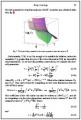 String Cosmology
by James M. Cline - arXiv
A pedagogical introduction to aspects of string cosmology, including the landscape (BPBT) solution to the cosmological constant problem, brane-antibrane inflation, warped compactification, the KKLMMT model, the eta problem of SUGRA models, etc.
(10981 views)