
Mathematics for Theoretical Physics
by Jean Claude Dutailly
Publisher: arXiv 2012
Number of pages: 767
Description:
This is a comprehensive and precise coverage of the mathematical concepts and tools used in present theoretical physics: differential geometry, Lie groups, fiber bundles, Clifford algebra, differential operators, normed algebras, connections, etc.
Download or read it online for free here:
Download link
(5MB, PDF)
Download mirrors:
Mirror 1
Similar books
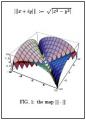 An Introduction to Hyperbolic Analysis
by Andrei Khrennikov, Gavriel Segre - arXiv
Contents: The hyperbolic algebra as a bidimensional Clifford algebra; Limits and series in the hyperbolic plane; The hyperbolic Euler formula; Analytic functions in the hyperbolic plane; Multivalued functions on the hyperbolic plane; etc.
(12011 views)
 The Place of Partial Differential Equations in Mathematical Physics
by Ganesh Prasad - Patna University
The reason for my choosing the partial differential equations as the subject for these lectures is my wish to inspire in my audience a love for Mathematics. I give a brief historical account of the application of Mathematics to natural phenomena.
(6523 views)
 Mathematical Methods of Physics
- Wikibooks
A book on common techniques of applied mathematics that are often used in theoretical physics. It may be accessible to anyone with beginning undergraduate training in mathematics and physics. It is useful for anyone wishing to study advanced Physics.
(11193 views)
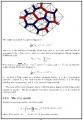 Random Matrices
by B. Eynard - arXiv.org
This is an introductory course about random matrices. These notes will give the reader a smell of that fascinating tool for physicists and mathematicians that are Random Matrices, and they can give the envy to learn and search more.
(10926 views)