
Introduction to Complexity Theory
by Oded Goldreich
1999
Number of pages: 375
Description:
Complexity Theory is a central field of Theoretical Computer Science, with a remarkable list of celebrated achievements as well as a very vibrant present research activity. The field is concerned with the study of the intrinsic complexity of computational tasks, and this study tend to aim at generality: It focuses on natural computational resources, and the effect of limiting those on the class of problems that can be solved. These lecture notes were taken by students attending my year-long introductory course on Complexity Theory, given in 1998-99 at the Weizmann Institute of Science. The course was aimed at exposing the students to the basic results and research directions in the field. The focus was on concepts and ideas, and complex technical proofs were avoided. It was assumed that students have taken a course in computability, and hence are familiar with Turing Machines.
Download or read it online for free here:
Download link
(2.3MB, PDF)
Similar books
 Lecture Notes on Computational Complexity
by Luca Trevisan
Notes from a graduate courses on Computational Complexity. The first 15 lectures cover fundamentals, the remaining is advanced material: Hastad's optimal inapproximability results, lower bounds for parity in bounded depth-circuits, and more.
(15031 views)
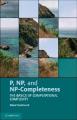 P, NP, and NP-Completeness: The Basics of Complexity Theory
by Oded Goldreich - Cambridge University Press
The main focus of the current book is on the P-vs-NP Question and the theory of NP-completeness. Additional topics that are covered include the treatment of the general notion of a reduction between computational problems.
(9228 views)
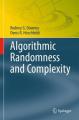 Algorithmic Randomness and Complexity
by R. G. Downey, D. R. Hirschfeldt - Springer
Computability and complexity theory are two central areas of research in theoretical computer science. This book provides a systematic, technical development of algorithmic randomness and complexity for scientists from diverse fields.
(10023 views)
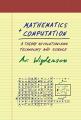 Mathematics and Computation
by Avi Wigderson - Princeton University Press
The book provides a broad, conceptual overview of computational complexity theory -- the mathematical study of efficient computation. It is useful for undergraduate and graduate students in mathematics, computer science, and related fields.
(3235 views)