
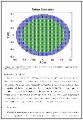
Lagrangian Solid Modeling
by Matthew Marko
Publisher: viXra 2017
Number of pages: 114
Description:
The author demonstrates a stable Lagrangian solid modeling method, tracking the interactions of solid mass particles, rather than using a meshed grid. This numerical method avoids the problem of tensile instability often seen with Smooth Particle Applied Mechanics by having the solid particles apply stresses expected with Hooke's law, as opposed to using a smoothing function for neighboring solid particles.
Download or read it online for free here:
Download link
(13MB, PDF)
Similar books
 Atmospheric Convection
by David J. Raymond - New Mexico Tech
A graduate course in the physics of atmospheric convection: Governing equations of fluid dynamics; Convection and turbulence; Thermodynamics of moist convection; Simple models of convection; Microphysics of convection; Convection and the environment.
(15455 views)
 Applied Aerodynamics
by Leonard Bairstow - Longmans, Green
The work aims at the extraction of principles of flight from, and the illustration of the use of, detailed information on aeronautics now available from many sources. The subject of aerodynamics is almost wholly based on experiment.
(21123 views)
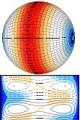 Using Multiscale Norms to Quantify Mixing and Transport
by Jean-Luc Thiffeault - arXiv
Mixing is relevant to many areas of science and engineering, including the pharmaceutical and food industries, oceanography, atmospheric sciences, etc. In all these situations one goal is to improve the degree of homogenisation of a substance.
(10137 views)
 The Theory of Rotating Fluids
by Harvey Philip Greenspan - Breukelen Press
The author's intention was to provide a foundation for the support and promotion of research in rotating fluids. The text concentrates on those topics which the author considers fundamental, of central importance to most the areas of application.
(14228 views)