
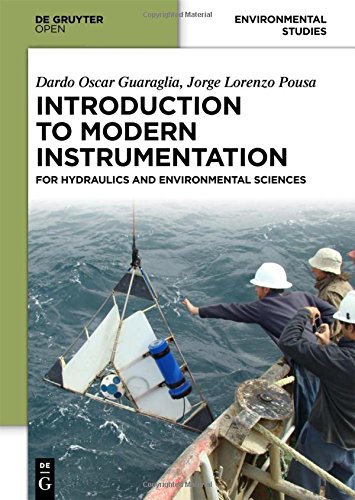
Introduction to Modern Instrumentation: For Hydraulics and Environmental Sciences
by D. O. Guaraglia, J. L. Pousa
Publisher: De Gruyter Open 2014
ISBN/ASIN: 3110401711
Number of pages: 432
Description:
The material presented in this book was prepared with the purpose of reflecting the technological changes that have occurred in environmental modern instrumentation in the last few decades. The book is intended for students of hydrology, hydraulics, oceanography, meteorology and environmental sciences.
Download or read it online for free here:
Download link
(multiple PDF files)
Similar books
 Atmospheric Pollution
by J.C. Jones - BookBoon
Atmospheric pollution is is becoming an increasingly important theme as the discussion on global warming becomes ever more relevant. The book introduces the different concepts of atmospheric pollution and the underlying principles.
(24581 views)
 Acceptable Risk?: Making Decisions in a Toxic Environment
by Lee Clarke - University of California Press
Modern technology give us much of what we value, but they also gave us Bhopal, Chernobyl, and Three Mile Island. What is acceptable risk? The author finds a pattern of decision-making based on relationships among organizations.
(17100 views)
 Concise Hydraulics
by Dawei Han - BookBoon
Introductory textbook on hydraulics written for undergraduate students in civil and environmental engineering, environmental science and geography. The aim of this book is to provide a concise and comprehensive coverage of hydraulics.
(18756 views)
 Fundamentals of Air Pollution Engineering
by Richard C. Flagan, John H. Seinfeld - Prentice Hall
The subject of this book is air pollution engineering. The goal is to present a rigorous analysis of the production of air pollutants and their control. The text is intended for use at the senior or first-year graduate level.
(21728 views)