
FHSST Physics
Publisher: Wikibooks 2005
Number of pages: 396
Description:
FHSST Physics is a Free High School Science Textbook on physics. It covers waves and wavelike motion, vectors, forces, rectilinear motion, momentum, work and energy, collisions and explosions, Newtonian gravitation, pressure, heat and properties of matter, electrostatics, electricity, magnets and electromagnetism, electronics, the atom, modern physics, atomic nucleus.
Download or read it online for free here:
Download link
(2.4MB, PDF)
Similar books
 Algebra-Based College Physics
by Ulrich Zürcher - Bookboon
This book (Part I and II) grew from the request of the author's students to provide a concise, but yet comprehensive text of the key topics and concepts covered in his algebra-based introductory physics course at a comprehensive public university.
(10955 views)
 Elementary Physics II: Oscillations, Waves
by Satindar Bhagat - Bookboon
We begin by discussing waves in matter - sound being a special case. To understand the nature of light we begin by introducing Electric and Magnetic fields and build the relationships which develop into the Maxwell's Electromagnetic Field Equations.
(8950 views)
 Discover Physics
by Benjamin Crowell - Lightandmatter.com
This is a conceptual physics textbook intended for students in a nonmathematical one-semester general-education course. The text covers conservation laws, electricity, magnetism, electromagnetic fields, theory of relativity and optics.
(22533 views)
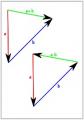 Physics Study Guide
by Karl Wick, at al. - Wikibooks
This guide is meant as a supplement to a year long freshman level physics course with a trigonometry prerequisite. The overview of equations and definitions and eventually sample problem solutions are pertinent to an introductory physics course.
(14235 views)