
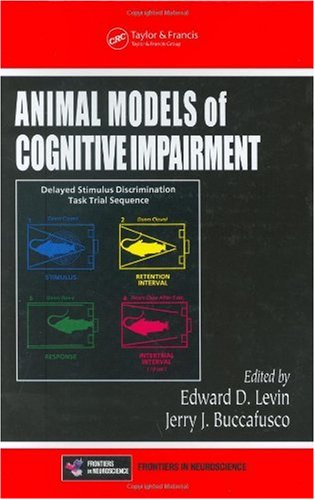
Animal Models of Cognitive Impairment
by Edward D. Levin, Jerry J. Buccafusco
Publisher: CRC 2006
ISBN/ASIN: 0849328349
ISBN-13: 9780849328343
Number of pages: 400
Description:
Animal Models of Cognitive Impairment examines some of the most popular and successful animal archetypes used in the context of drug discovery. It provides integrated coverage of the latest research concerning neuronal systems relevant to cognitive function and dysfunction, assimilating reviews of this research within the context of each chapter. The book comprehensively discusses a wide variety of animal models of cognitive impairment, including genetic, lesion, pharmacological, and aging related impairments. It also explores the significance of this research in regards to the treatment of various addictions and disorders such as stroke, autism, Alzheimer’s, schizophrenia, and ADHD.
Download or read it online for free here:
Read online
(online html)
Similar books
 Motor Neurone Disease
- National Institute for Health and Clinical Excellence
This guideline considers the signs and symptoms that can be used for predicting respiratory impairment in patients with MND, the diagnostic accuracy of investigations for detecting and monitoring respiratory impairment, ...
(10210 views)
 Neuromuscular Disorders
by Ashraf Zaher - InTech
Neuromuscular Disorders is an interesting compendium of diverse and fairly inclusive topics in disorders of nerve and muscle, with a spectrum of generally well written and pertinent chapters referencing specific categories of neuromuscular diseases.
(10356 views)
 Multiple Sclerosis
- Royal College of Physicians
Many people with MS need to make extensive use of health services and social services. The aim of this guideline is to ensure that people with MS benefit from a coherent response from services, to minimize their problems as far as can be achieved.
(10253 views)
 Discovering the Brain
by Sandra Ackerman - National Academies Press
A guide to the brain -- an easy-to-read discussion of the brain's physical structure and where functions such as language and music appreciation lie. Science writer Sandra Ackerman cuts through the complexity to bring this vital topic to the public.
(7612 views)