
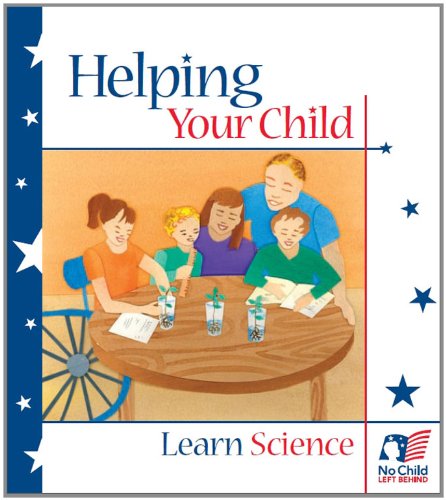
Helping Your Child Learn Science
by Nancy Paulu, Margaret Scott
Publisher: U.S. Department of Education 2005
ISBN/ASIN: B0057ADN4S
Number of pages: 39
Description:
This booklet provides parents of children ages 3 through 10 with information, tools and activities they can use in the home and community to help their child develop an interest in the sciences and learn about the world around them.
Download or read it online for free here:
Download link
(1.6MB, PDF)
Similar books
 Teacher Pioneers
by Caroline C. Williams, et al. - ETC Press
Teachers accomplish their daily miracles through collaboration by asking questions about what they don't know and sharing what they do. This book was written by teacher pioneers to share their collaborating, their designing, and their exploring.
(7340 views)
 Classroom Management Theorists and Theories
by Chris Adams, et al. - Wikibooks
This book studies a variety of classroom management theorists and their theories, noting the historical background of the theorist, a basic overview of the theory, and a professional critique of the theory. It also discusses practical applications.
(12540 views)
 A Primer on America's Schools
by Terry M. Moe - Hoover Institution Press
A broad overview of the American education system -- pulling together basic facts about its structure and operation, identifying key problems that hinder its performance, and offering perspectives on the requirements of genuine reform.
(9425 views)
 Testing Student Learning, Evaluating Teaching Effectiveness
by W. M. Evers, H. J. Walberg - Hoover Institution Press
This book takes a hard look at the professional, technical, and public policy issues surrounding student achievement and teacher effectiveness -- and shows how testing and accountability can play a vital role in improving American schools.
(11962 views)