
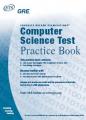
GRE Computer Science Test Practice Book
Publisher: Educational Testing Service 2001
Number of pages: 54
Description:
This free GRE practice book contains one actual, full-length GRE Computer Science Test and test-taking strategies. You can become familiar with test structure, content, test instructions and answering procedures. The test consists of about 70 multiple-choice questions, some of which are grouped in sets and based on such materials as diagrams, graphs, and program fragments.
Download or read it online for free here:
Download link
(1.1MB, PDF)
Similar books
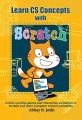 Computer Science Concepts in Scratch
by Michal Armoni, Moti Ben-Ari - Weizmann Institute of Science
This book will familiarize you with the Scratch visual programming environment, focusing on using Scratch to learn computer science. Each concept is introduced in order to solve a specific task such as animating dancing images or building a game.
(8240 views)
 CS for All
by Christine Alvarado, et al. - Harvey Mudd College
Our objective is to provide an introduction to computer science as an intellectually vibrant field rather than focusing exclusively on computer programming. We emphasize concepts and problem-solving over syntax and programming language features.
(12506 views)
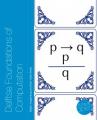 Delftse Foundations of Computation
by Stefan Hugtenburg, Neil Yorke-Smith - TU Delft Open
This is a textbook for a one quarter introductory course in theoretical computer science. It includes topics from propositional and predicate logic, proof techniques, set theory and the theory of computation, along with practical applications to CS.
(6436 views)
 A New Kind of Science
by Stephen Wolfram - Wolfram Media
Starting from a collection of simple computer experiments -- illustrated in the book by striking computer graphics -- Wolfram shows how their unexpected results force a whole new way of looking at the operation of our universe.
(13974 views)