
Modelling Batch Systems Using Population Balances
by Peter Dybdahl Hede
Publisher: BookBoon 2006
ISBN/ASIN: 8776811808
Number of pages: 58
Description:
One-dimensional population balances are used as a modelling tool for a variety of chemical processes. In particle technology population balances are typically used for modelling agglomeration processes, e.g. in fluid bed granulation processes. In this text the population balances are introduced and fully derived with focus on each of the terms in the balance. The text is an excellent starting point for beginners and thus you will be familiar with the basic principles and theory within this relevant chemical engineering field on a bachelor or master-of-science level.
Download or read it online for free here:
Download link
(5.9MB, PDF)
Similar books
 Elementary Applied Chemistry
by Lewis Benajah Allyn - Ginn and Company
The object of the exercises in this book is to create and to foster a real love for and interest in the great science of chemistry, to give the pupil a broader outlook on life, and to cause him to feel that he is a factor in the busy, living world.
(15376 views)
 Elements and Atoms: Case Studies in the Development of Chemistry
by Carmen Giunta - Le Moyne College
My intention here is to collect several articles by scientists who contributed to the development of knowledge about atoms and elements, and to provide sufficient background and commentary to place the work of these pioneers in context.
(16257 views)
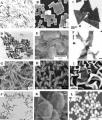 Frontiers in Chemistry
by B Viswanathan - National Centre for Catalysis Research
Performance materials, composite materials, nano materials, silicon substitutes, solar cells, ionic liquids, fuel cells, nuclear energy options, hydrogen energy, energy storage, diagnosis and drug delivery, pollution control, and more.
(21533 views)
 Introductory Chemistry Online
by Paul R. Young - Wikibooks
Introductory Chemistry Online is an open-source introductory chemistry textbook/workbook that is designed cover a college-level one-semester course. The text is designed to be simple, uncluttered and very much to the point.
(12535 views)