
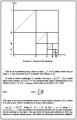
Measure-Preserving Systems
by Karl Petersen
Publisher: University of North Carolina 2008
Number of pages: 65
Description:
These notes provide an introduction to the subject of measure-preserving dynamical systems, discussing the dynamical viewpoint; how and from where measure-preserving systems arise; the construction of measures and invariant measures; some basic constructions within the class of measure-preserving systems; and some mathematical background on conditional expectations, Lebesgue spaces, and disintegrations of measures.
Download or read it online for free here:
Download link
(510KB, PDF)
Similar books
 Parallel Complexity Theory
by Ian Parberry - Prentice Hall
The rapid growth of parallel complexity theory has led to a proliferation of parallel machine models. This book presents a unified theory of parallel computation based on a network model. It is the first such synthesis in book form.
(9433 views)
 Introduction to Complexity Theory
by Oded Goldreich
Complexity theory is the study of the intrinsic complexity of computational tasks. The book is aimed at exposing the students to the basic results and research directions in the field. The focus was on concepts, complex technical proofs were avoided.
(10672 views)
 Complexity and Computation
by Allen Downey - Green Tea Press
This book is about data structures and algorithms, intermediate programming in Python, complexity science and the philosophy of science. The book covers Graphs, Analysis of algorithms, Scale-free networks, Cellular Automata, Agent-based models, etc.
(15551 views)
 Complexity Theory: A Modern Approach
by Sanjeev Arora, Boaz Barak - Cambridge University Press
The book provides an introduction to basic complexity classes, lower bounds on resources required to solve tasks on concrete models such as decision trees or circuits, derandomization and pseudorandomness, proof complexity, quantum computing, etc.
(17503 views)