
The Theory of Languages and Computation
by Jean Gallier, Andrew Hicks
Publisher: University of Pennsylvania 2006
Number of pages: 109
Description:
From the table of contents: Automata; Formal Languages (A Grammar for Parsing English, Context-Free Grammars, Derivations and Context-Free Languages, Normal Forms for Context-Free Grammars, Chomsky Normal Form, ...); Computability; Current Topics.
Download or read it online for free here:
Download link
(950KB, PDF)
Similar books
 The Design and Implementation of Probabilistic Programming Languages
by Noah D. Goodman, Andreas Stuhlmüller - dippl.org
This book explains how to implement PPLs by lightweight embedding into a host language. We illustrate this by designing WebPPL, a small PPL embedded in Javascript. We show how to implement several algorithms for universal probabilistic inference.
(6799 views)
 Elements of Programming
by Alexander Stepanov, Paul McJones - Semigroup Press
This book applies the deductive method to programming by affiliating programs with the abstract mathematical theories. Specification of these theories, algorithms and theorems and lemmas describing their properties are presented together.
(6095 views)
 The Z Notation: A Reference Manual
by J. M. Spivey - Prentice Hall
The standard Z notation for specifying and designing software has evolved over the best part of a decade. This an informal but rigorous reference manual is written with the everyday needs of readers and writers of Z specifications in mind.
(12027 views)
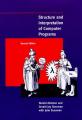 Structure and Interpretation of Computer Programs
by Harold Abelson, Gerald Jay Sussman, Julie Sussman - McGraw-Hill
The book teaches how to program by employing the tools of abstraction and modularity. The central philosophy is that programming is the task of breaking large problems into small ones. You will learn how to program and how to think about programming.
(18278 views)