
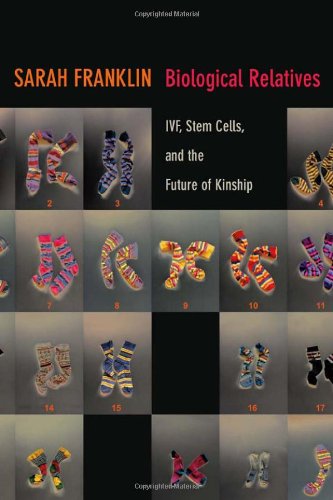
Biological Relatives: IVF, Stem Cells, and the Future of Kinship
by Sarah B. Franklin
Publisher: Duke University Press 2013
ISBN/ASIN: 0822354993
Number of pages: 376
Description:
Sarah Franklin explores how the normalization of IVF has changed how both technology and biology are understood. Drawing on anthropology, feminist theory, and science studies, Franklin charts the evolution of IVF from an experimental research technique into a global technological platform used for a wide variety of applications, including genetic diagnosis, livestock breeding, cloning, and stem cell research.
Download or read it online for free here:
Download link
(1.9MB, PDF)
Similar books
 The New Genetics
- NIGMS
An introduction to genetics. From the table of contents: Foreword; How Genes Work; RNA and DNA Revealed: New Roles, New Rules; Life's Genetic Tree; Genes Are Us; 21st-Century Genetics; Glossary; Poster: Living Laboratories.
(19063 views)
 Gene Therapy: Developments and Future Perspectives
by Chunsheng Kang - InTech
The aim of this book is to cover key aspects of existing problems in the field of development and future perspectives in gene therapy. Contributions consist of basic and translational research, as well as clinical experiences.
(14031 views)
 The Genetic Landscape of Diabetes
by Laura Dean, Johanna McEntyre - NCBI
Guide to the variations in our DNA that influences our risk of developing diabetes. The book introduces the reader to what diabetes is and how it develops. Written for anyone interested in science, patients with diabetes, physicians, students, etc.
(18419 views)
 Mapping Our Genes - Genome Projects: How Big? How Fast?
- U.S. Government Printing Office
The growing speed of research in molecular biology had led to proposals to apply novel molecular biological methods to the genetics of entire organisms. Research efforts aimed at mapping large portions or entire genomes are called genome projects ...
(6779 views)