
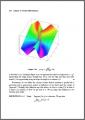
Community Calculus
by David Guichard, Neal Koblitz
2008
Number of pages: 446
Description:
This is the calculus text for Math 225. The emphasis in this course is on problems—doing calculations and story problems. From the contents: analytic geometry, derivative, rules for finding derivatives, transcendental functions, curve sketching, applications of the derivative, integration, techniques and applications of integration, sequences and series, three dimensions, vector functions, partial differentiation, multiple integration, vector valculus.
Download or read it online for free here:
Download link
(5MB, PDF)
Similar books
 Mathematics For Engineering Students
by Samuel Keller - D. Van Nostrand Company
Much that is ordinarily included in treatises on Analytics and Calculus, has been omitted from this book, not because it was regarded as worthless, but because it was considered quite unnecessary for the student of engineering.
(17382 views)
 Calculus I, II, and III
by Jerrold E. Marsden, Alan Weinstein - Springer
The goal of this text is to help students learn to use calculus intelligently for solving a wide variety of mathematical and physical problems. The exercise sets have been carefully constructed to be of maximum use to the students.
(25740 views)
 Elementary Textbook on the Calculus
by Virgil Snyder - Cornell University Library
The author made special effort to present the calculus in a simple and direct form. Easy applications of the calculus to maxima and minima, tangents and normals, inflexions, asymptotes, and curve tracing have been introduced.
(19628 views)
 Functions Modeling Change: A Precalculus Course
by Marcel B. Finan - Arkansas Tech University
This supplement consists of the author's lectures of a freshmen-level mathematics class offered at Arkansas Tech University. The text represents an effort to produce exposition that is accessible to a student at the freshmen or high school levels.
(15875 views)