
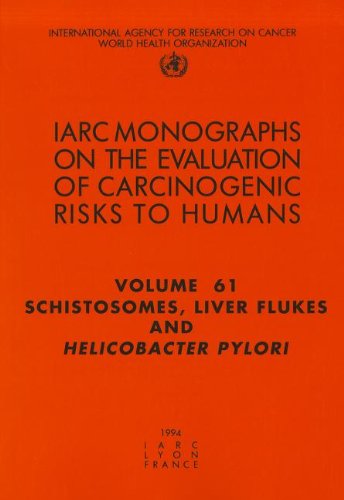
Schistosomes, Liver Flukes and Helicobacter pylori
Publisher: International Agency for Research on Cancer 1994
Number of pages: 279
Description:
This volume Evaluates the carcinogenic risk to humans posed by infection with three schistosoma trematodes, three liver flukes, and the bacterium Helicobacter pylori. These biological agents were selected for evaluation on the basis of evidence suggesting a causal association between infection and the development of human cancers.
Download or read it online for free here:
Download link
(22MB, PDF)
Similar books
 Comparative Oncology
by Alecsandru Ioan Baba, Cornel Catoi - Romanian Academy
Comparative oncology has undergone a special development over the past decades and has attracted the interest of researchers who have studied the etiopathogenesis, morphogenesis and epidemiology, as well as the carcinogens of tumor disease.
(12103 views)
 Understanding CLL/SLL Chronic Lymphocytic Leukemia and Small Lymphocytic Lymphoma
by Lymphoma Research Foundation - Smashwords
This guide is an educational resource compiled by the Lymphoma Research Foundation that provides general information on chronic lymphocytic leukemia and small lymphocytic lymphoma. Before starting treatment, patients should discuss the potential benefits
(7175 views)
 Tumour Viruses
by Joanna Parish (ed.) - MDPI AG
In this volume, we seek to explore novel mechanisms of cellular transformation by oncogenic viruses, the role of viral infection in cancer development in understudied body sites and the potential role of novel viral pathogens in cancer development.
(6593 views)
 Introduction to Cancer Biology
by Momna Hejmadi - BookBoon
A short primer on how cancers develop and grow, and a gentle exploration of the fundamental concepts, using examples and key figures for illustration. The book explains six basic principles that inform our current understanding of cancer.
(26012 views)