
Introduction to Theory of Computation
by Anil Maheshwari, Michiel Smid
Publisher: Carleton University 2012
Number of pages: 246
Description:
This is a free textbook for an undergraduate course on the Theory of Computation. Contents: Finite Automata and Regular Languages; Context-Free Languages; Turing Machines and the Church-Turing Thesis; Decidable and Undecidable Languages; Complexity Theory.
Download or read it online for free here:
Download link
(1.2MB, PDF)
Similar books
 Applicative Computing: Its quarks, atoms and molecules
by V. E. Wolfengagen - JurInfoR
This work covers the advanced topics in main ideas of computing in general. Material is especially useful for the instructor, postgraduate and graduate students of IT-specialties and is suitable for the system of training of specialists.
(11807 views)
 Models of Computation: Exploring the Power of Computing
by John E. Savage - Addison-Wesley
The book re-examines computer science, giving priority to resource tradeoffs and complexity classifications over the structure of machines and their relationships to languages. This viewpoint is motivated by more realistic computational models.
(9511 views)
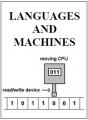 Languages and Machines
by C. D. H. Cooper - Macquarie University
This is a text on discrete mathematics. It includes chapters on logic, set theory and strings and languages. There are some chapters on finite-state machines, some chapters on Turing machines and computability, and a couple of chapters on codes.
(20829 views)
 Rule-based Computation and Deduction
by Helene Kirchner, Pierre-Etienne Moreau - ESSLLI
This text first introduces the concept of rewriting which is behind rule-based systems. Then the rewriting logic and the rewriting calculus are defined and shown to be especially suited to describing concurrent and non-deterministic computations.
(8805 views)