
A First Course in Mathematics Concepts for Elementary School Teachers
by Marcel B. Finan
Publisher: Arkansas Tech University 2006
Number of pages: 452
Description:
Problem-solving is the cornerstone of school mathematics. The techniques discussed in this book should help you to become a better problem solver and should show you how to help others develop their problem-solving skills.
Download or read it online for free here:
Download link
(4.2MB, PDF)
Similar books
 A Second Course in Mathematics Concepts for Elementary Teachers
by Marcel B. Finan - Arkansas Tech University
Topics: Integers; Rational Numbers; Real Numbers; Functions and their Graphs; Misleading Graphs and Statistics; Measures of Central Tendency and Dispersion; Probability; Basic Geometric Shapes and Figures; Symmetry of Plane Figures; etc.
(12465 views)
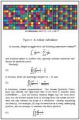 The Experimental Mathematician: The Pleasure of Discovery and the Role of Proof
by Jonathan M. Borwein - Dalhousie University
The emergence of powerful mathematical computing environments, the growing availability of correspondingly powerful computers and the pervasive presence of the internet allow for mathematicians to proceed heuristically and quasi-inductively.
(12635 views)
 On the Study and Difficulties of Mathematics
by Augustus De Morgan - The Open Court Publishing
In compiling the following pages, my object has been to notice particularly several points in the principles of algebra and geometry, which have not obtained their due importance in our elementary works on these sciences.
(10436 views)
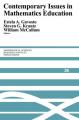 Contemporary Issues in Mathematics Education
by E. A. Gavosto, S. G. Krantz, W. McCallum - Cambridge University Press
What is the appropriate balance among theory, technique, and applications? What is the role of technology? How do we fulfill the needs of students entering other fields? This volume presents a serious discussion of these educational issues.
(14091 views)