
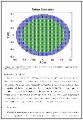
Lagrangian Solid Modeling
by Matthew Marko
Publisher: viXra 2017
Number of pages: 114
Description:
The author demonstrates a stable Lagrangian solid modeling method, tracking the interactions of solid mass particles, rather than using a meshed grid. This numerical method avoids the problem of tensile instability often seen with Smooth Particle Applied Mechanics by having the solid particles apply stresses expected with Hooke's law, as opposed to using a smoothing function for neighboring solid particles.
Download or read it online for free here:
Download link
(13MB, PDF)
Similar books
 Surface Waves
by John V. Wehausen, Edmund V. Laitone - Springer
Since its first publication this article has been an inspirational resource for students and researchers in the various fields of science and engineering. This may be attributed to its encyclopedic scope and to the scholarly efforts of the authors.
(13207 views)
 Computational Turbulent Incompressible Flow
by Johan Hoffman, Claes Johnson - Springer
In this book we address mathematical modeling of turbulent fluid flow, and its many mysteries that have haunted scientist over the centuries. We approach these mysteries using a synthesis of computational and analytical mathematics.
(13616 views)
 Computational Fluid Dynamics
by Hyoung Woo Oh - InTech
This book is intended to serve as a reference text for advanced scientists and research engineers to solve a variety of fluid flow problems using computational fluid dynamics. Chapters are contributed by the practiced experts in the field.
(18330 views)
 Turbulence for (and by) amateurs
by Denis Bernard - arXiv
Series of lectures on statistical turbulence written for amateurs but not experts. Elementary aspects and problems of turbulence in two and three dimensional Navier-Stokes equation are introduced. A few properties of scalar turbulence are described.
(10114 views)