
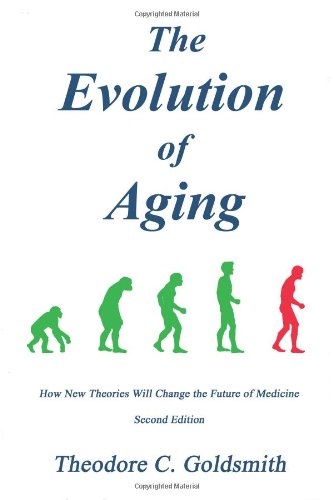
The Evolution of Aging
by Theodore C. Goldsmith
Publisher: Azinet LLC 2006
ISBN/ASIN: 0978870905
ISBN-13: 9780978870904
Number of pages: 166
Description:
This book provides a historical review of biological aging theories including underlying evolution and genetics issues and describes exciting recent discoveries and new theories that are causing renewed interest in aging-by-design. The author discusses Darwin's theory of evolution as well as more recent proposed modifications such as the selfish gene theory, evolvability theory, and group selection in connection with their effects on aging theory.
Download or read it online for free here:
Download link
(1.5MB, PDF)
Similar books
 Gene Therapy: Developments and Future Perspectives
by Chunsheng Kang - InTech
The aim of this book is to cover key aspects of existing problems in the field of development and future perspectives in gene therapy. Contributions consist of basic and translational research, as well as clinical experiences.
(14007 views)
 The Genetic Landscape of Diabetes
by Laura Dean, Johanna McEntyre - NCBI
Guide to the variations in our DNA that influences our risk of developing diabetes. The book introduces the reader to what diabetes is and how it develops. Written for anyone interested in science, patients with diabetes, physicians, students, etc.
(18397 views)
 Biological Relatives: IVF, Stem Cells, and the Future of Kinship
by Sarah B. Franklin - Duke University Press
Franklin explores how the normalization of IVF has changed how both technology and biology are understood. Drawing on science studies, Franklin charts the evolution of IVF from an experimental research technique into a global technological platform.
(8902 views)
 Making Sense of Your Genes: A Guide to Genetic Counselling
- Genetic Alliance
The goal of genetic counseling is to help you learn more about the causes of genetic conditions and how they affect you. Genetic counselors can review your family medical histories and explain how genetic conditions are passed down through families.
(7208 views)